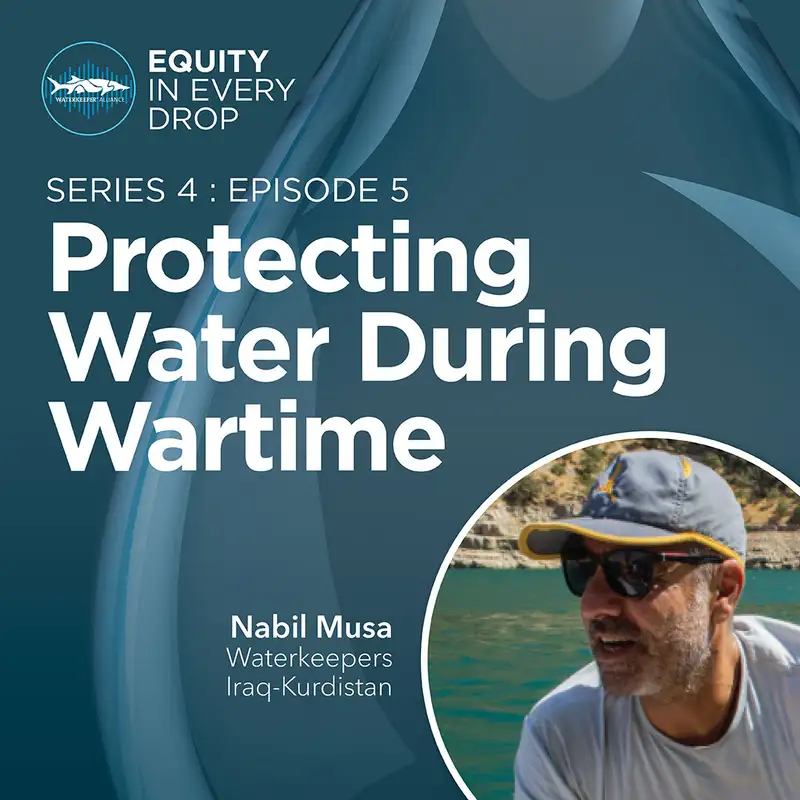
Protecting Water During Wartime
Transcript - Series 4, Episode 5: Protecting Water During Wartime
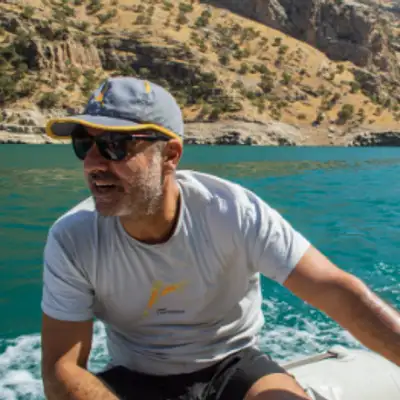
Thomas Hynes: [00:00:00] Our guest today is Nabil Musa of Waterkeepers Iraq Kurdistan. Unlike many waterkeepers, Nabil does not have a traditional background in science or ecology, but rather the arts. However, a love for nature and of his home country led him to a distinguished career in water protection. Nabil, it's great to see you again.
Thank you so much for being here. I'm so happy uh, to get the chance to speak with you again.
Nabil Ibrahim Musa. : Thank you Thomas. Thank you. Really looking forward to updating each other with Yeah everything. So, I'm glad to be here with you.
Thomas Hynes: Fantastic. Yeah. And for our listeners um, Nabil and I met about a year or two ago in a conversation similar to this where I wrote a written profile of him on our website at waterkeeper.org.
And I was just very fascinated by his story and his journey and the circumstances, which he has done his work. And when we rolled out this podcast I knew I wanted to find a way to get you on here because I just loved talking to you and I thought others would love to hear from you as well.
So with that in [00:01:00] mind, let's start at the beginning. I've spoken to probably a hundred Waterkeepers and most of them will say, oh, I was a lawyer and then I, I became a waterkeeper. I was a scientist. I became a Waterkeeper. We don't have a lot of waterkeepers who were artists. I want to hear about your story and what brought you to this role.
Nabil Ibrahim Musa. : Yeah. Thank you so much. And thank you for this opportunity again. Yes I studied art, but I, I learned through studying arts I learned how powerful art can be because it's such a freedom platform. You can talk about the environment.
You can talk about any politics issues and anything happening in the society. Art can't be involved because art is shaping it however you wanted to shape it. So if you wanna talk about religions, it's whatever gaps in the society actually and art can reform itself and is such a beautiful tool to use.
As you mentioned, I didn't specifically study science, but I did learn science a little bit through nature itself. Because when you go to nature, when you [00:02:00] observe how the fishes are actually spouting, for example, they go upstream. So you can learn this from YouTube, you can learn to study.
But I have learned by just being in the nature and wild to give yourself growing up with the nature and plus of course, because of my work right now, in last 15 years, I've been working on protecting my rivers and bringing my rivers back. I worked with a lot of scientists.
people are always fascinated when I say I'm not a scientist, they think, but yeah your works look like you look like scientist, . Yeah. I said I've been trained by scientists. Of course I learned a lot of being honest, collecting samples and data. But yeah, I think the natures was my university, nature itself. I learned a lot by just being with the river and fish and biodiversity.
Thomas Hynes: Yeah. When we spoke you had said that there were one of the things that I I took away from it, is that you would spend these hours by the river when you were growing up. I think you were maybe tending to your family's sheep and you would swim and you [00:03:00] would fish. And it was the way I think you described it that it was sort of a sanctuary in many ways for you.
Nabil Ibrahim Musa. : Yeah, it was a big relief because I was born in 1970s and of course, I was four years old when the Iraq and Iran war started. The only way I could be a normal child it was my river because I was born very close to the river, which the river at that time was functional
four season you could catch fish in the middle of the summer even. But unfortunately everything's changed after that. So of course, the nature and river, my river was healing for everything. It was my family was important. The house I was living in, The concrete house was important. The most important thing was the house we built next to the river.
When the air, like the war, the planes come to attack and bomb in our city. The only way we could feel safe was to go to the river and the shelter we built next to the river. Just stay there sometime we used to spend a week there. And that was the real home for me. But of course we had the concrete [00:04:00] home as well.
But just being by the nature, actually, you build your own system. You own your thinking, you own your food, you own, you can be owner of everything. But unfortunately now I'm realizing I'm nearly 50. I feel like I live this such a thing we call society and living in this block of sky scrubber houses and block of flats.
And I just feel like when I was a child, I didn't feel any fear. Actually the nature was fixing my fear living in the towns and airplanes coming attacking the concrete house and everything's end up because it happened before. So that's what we actually scared of. So nature was my, I don't know.
It was like a live action movie and there was not much TV at that time. So I remember we were watching a couple of hours in the morning watching, could be Tarzan or some animations. When the TV was shut. That's it we used to go to the river, we become the character of the animation. Like I was like a Tarzan, [00:05:00] I was like with the sheep catching fish and, knowing how to actually cross the river, building your own little boats and kayaks and stuff like that.
So that's, I'm realizing how different we are my generation, because we had access to the people nature and to knowing what you have. Definitely when you grow up, you look again and say, do I have it again? And when you don't have it. You become a waterkeeper, you defend it, you trying to bring it back.
So I remember this river I'm fighting for. I remember I used to swim in, I used to catch fish. I used to drink water and provide food for my family and that river now, nothing you can do anything like that. No way. So I'm around to tell the people, say, if we keep continuing like this, we turn in our biodiversity to the high desert basically.
So we, we dig in our own grave by ourselves slowly, by creating all these garbages and not letting the birds back. So basically we go, we touch every homes, every, like, fish home, birds reptiles, everything. We destroyed [00:06:00] everything since I was a child until now. And so I, I am witnessing that tragedy.
Thomas Hynes: Yeah, I mean, there's, that's there's, that's a really bittersweet answer because parts of it are so, I mean, are so beautiful. I mean, you think about the resiliency of nature, but also the resiliency of children. And what could have been, I'm sure in many ways was a very scary childhood that you found this sanctuary, you found this peace and this happiness
emotionally and physically at the river. And it's so not to read ahead too much, but it's, I think about this as a writer and about as a story. And you have this river and this nature providing this gift to you. And now all these years later, you're returning the favor in a lot of ways.
And it's again, bittersweet and in many ways sad and many ways Lovely at the same time. So I want to I wanna move ahead a little bit on, in your story.
So then you moved to England. Is that right? And you pursued a, a career in, in the
arts, and in acting, is that right? And you met some climate activists, [00:07:00] right? Is that correct?
Nabil Ibrahim Musa. : That's true. Yeah I, when I studied acting I was I was very energetic person, but I didn't know how to actually shape my energy to what I am I good for and I didn't know how to do drawing and stuff like that.
But eventually I found out how can I channel my energy and use it and shape it? So we learned through the five years of studying theater and performance, we learned theater platform is the place for, actually, if you wanna complain, if you wanna shout or if you have something concerning and you're not happy about, you can shape it and you can
turn it to art form and you can perform it to people. So it could be body language, sign language could be, yeah, anything related to the art, and you can shape it. And I found it quite therapeutic because that was the only place I could take my concern and burst my lump. Especially psychological lump when you have some concern, the theater is the best performance.
Go out there, bring some, express it, what you're [00:08:00] concerned about. So when I left in 1996 and when I graduate as a professional trained actor, so I was like in that mood, but unfortunately there was no way I could remain in here and Civil War started. Most of the artists was in danger, especially people like me, mouthy
and we express, we don't just stay as a slave and people do something wrong and sitting down and quiet. No. When we see something's wrong. We always say something, especially when it's criminal, like river stealing or bombing fish or somebody's building dams and we are not gonna just sit here and watch this criminal.
So I took this energy to UK but I realized it took me so many years. I was not actor or artist or anything like that. I was heading to learn English and building my new culture, which is not a British and it's not a Kurdish. I have to adopt my culture. I have to build my own culture there. It's a combined, it's mixed culture for me.
So I did, I found really good quality people's [00:09:00] artists, really environmentalists, and I was working with them, volunteer until learning a little bit more English and get to know them and after I become a full-time climate change activist with them. So I did that for many years with with beautiful artists, and I realized these people, they use the art creativities to use to express themself and so many demonstration.
We used to go peacefully. Art was the main things to actually show your concern and complain. Instead of violence or throwing things, because I grow up in the violence, I know what does the violence look like and I know how to be violence person, but I don't want to, I don't want to anymore because I am changed.
I changed a lot. So I wanna keep that and keep learning and keep using I updated tool. So the best tool for me in these days is very powerful art performance, animations, comics. And telling story through bodies and how you turn it to funny as well. I know my stories, most of my story is tragic, but I [00:10:00] don't wanna be the dark pile of the dark person as soon as they see me.
Oh, this guy. So we add some fun and comics into it and to people they listen. They know what's going on. They still there this tragic, but we turn it a little bit fun as well. So art is always peaceful and I believe it and we, we use it every year. We many different approach. And so yeah, and I came back and of course that's a long story.
When I came back I was really looking forward to see my community, my river, but all was destroyed and all is gone. So for somebody like me walked, I walked on this planet, I studied art, I worked with a lot of beautiful human being. So I thought I, I have to be around to tell this story.
That's why we are here. One of the sweetest part, because you talked about sweet and bitter side of our work, that the sweetest part of my work. I'm talking to you. From different continent about the same issue. I met my, I found my tribe, I found the people they can understand me. See now we have a relationship.
We always [00:11:00] updating each other. How's it going? How's it going? We don't treat this patch of land as a, just only my country. I treat the planet like my country. When I come to you, as I see all my Waterkeeper fellers. I don't feel I'm Iraqi. I feel I am belong to the universe. We here all we need to do to talk to each other more and to understand what is our concern.
Like, for example, now. What kind of state we are in after USAID's been cut and all these ngo, most of the NGOs actually, they left Iraq and we remain in here and we remain in here. We've been remaining the reasons why we are successful, because we volunteering, we believe in this our works has not been finished.
What we have started is getting worse and worse. That's why we cannot leave. That's why we have we have a new column on our website. We shout for donation in these days because no way we can leave. No way we can leave this path we created 15 years ago. No way we can close it and say, oh, it's done. It's not done.
We are gonna remain. We are gonna [00:12:00] continue and wish us good luck.
Thomas Hynes: I that's, yeah. I, well, I wish you more than luck. There's a lot in there that I want to unpack because that was a great answer. One thing that really sticks out to me is that, even in my experience and I'm a little bit younger than you, but not much, growing up and
learning about the world and I love to read history books but to get it as a story, to get it with humor to get it with heart. It really does land and resonate more when you use that. So, and I want to, you described yourself as mouthy, which I would describe myself as well.
So I, I smiled when you said that. But what is the, because I imagine there is some overlap here. How has a background in, in acting helped you be an activist or an advocate, however you want to describe that 'cause I imagine there's probably a lot of overlap there.
Nabil Ibrahim Musa. : These days every day I wake up is for me I don't wanna say I have so many different characters to put myself in and [00:13:00] diagnose myself with a schizophrenic. No, I think we all are actors, we all, we all puppeteer for our own puppet. And so I train i'm a professional puppeteer too, so when I go to the bank, I prepare my puppet, my personnel, my character, I'm going to the bank.
So behave good, is the bank. You cannot be funny or you cannot be activist there and shouting. So I'm always working on my for example, what kind of acting is necessary? So I train. I have been trained as an actor, so the life is, for me, I see the huge life as a big theater, but inside that play there's so many small plays actually playing.
So we are in it and the society, there is so many different shows going on out there. So it depends what you choose, depends who you wanna be. So I think it's the opportunity every day as I wake up, I see there's a different show. And positive show. If it's negative, I go there, I see something's negative. I acted, I do something about, I take action.
So I just don't see something wrong because the person is doing something wrong or preparing something wrong. [00:14:00] If I see not saying something I'm a criminal too. I'm a criminal twice even more.
it did help me how to express for example، I remember I started with Shakespeare's play when I studied and when I acted Othello
I remember I started with Shakespeare's play when I studied and when I acted Othello
that was my audition piece. I did Othello show. I did it so passionately when the author was taking the sword out and trying to harm himself because, he realized he killed Desdemona not fairly and it was stupid mindset. I did this, so like passion and the teacher said whoa.
I remember he was an audio. And I said, whoa, this guy's tough. And I remember they got me, they said straightaway, they said, oh, you are a good actor. Let's get this guy. So I think that energy is good sometime when I go to, I do a lot of podcasts in here, a lot of TV shows. Um, And I put a little bit of that kind of drama and passion.
It is not a fake drama. It's real. Sometime I cry. I cry for my fish. I, I'm [00:15:00] allowed to cry. I'm not a shame about it because I have the same emotion of anybody else. And so I'm affected and I use that kind of little bit. I add some, not a fake performance, but I. It helped me to how to tone in my voice and where I can shout, where I can actually express my with my wrinkles and like, come on, listen to me.
With, especially with the stupid politicians and stupid businessman, only things they have is money. They don't have. Absolutely. They don't have a clue how the mountain is run and BioD diversities and birds. They don't even look, they don't go to the mountain like we do. So that's why we have to find the language and perfect acting with these people.
actually our system is run by most of them. I don't wanna generalize everything, but there is few of absolutely good politicians, but you can count them by finger. But the rest, they are really difficult to deal with and so you have to find a way to make it easy to make them to understand.
And the [00:16:00] latest example I can talk about, like we built, we just finished sewage facility treatment prototype. As a prototype for filtering pure sewage, and we build it so beautifully, you can see everything from the first stage in the end. Why? Just because we want to teach these guys. Look, this is how you deal with your poor, pure sanitation and sewage in attack contamination.
So you have to make a really clear. I don't wanna say highly, they are not highly intelligent, but unfortunately in the field we are working on, they don't have that much clue. That's why we have to find the best performance best way of delivering information to them.
Thomas Hynes: Yeah, and it's, I mean. Again, I don't mean to make everything so full circle, but you're putting on a presentation, you're putting on a, a play of saying, here's how the sewage could work.
Yeah. That's so interesting. And I I'm sorry to get snagged on Shakespeare. I love Shakespeare still. I love it so much and I love Othello and I could see you in that role. But I don't want to get us too off track. So, so you were in England and then you returned to Iraq.[00:17:00]
And I think as you told me you were so relieved that your family was safe, but the river surrounding nature did not fare as well after the conflict with the United States. Take me to that time. And what, I can only imagine what that feeling was like to return.
And then I believe you met, I don't want to tell the story for you, but then you met Anna Backman
from Puget Soundkeeper, so tell me about that how that led you to nature Iraq and to where we are today.
Nabil Ibrahim Musa. : Yeah, I remember when I was in England uh, I, I was a big fan of watching documentaries, especially BBC's program.
And suddenly I watched this one hour documentary about Iraq's marshlands. I didn't know that much about the marshlands. Of course, we know about high mountains in here and rivers. Free flowing rivers and Whitewater Rapids, but I didn't, I was not kayaker at that time when I was young and when I used to live here.
So when I was in England, I watched this documentary talking about how this organization tried to protect the marshland in southern Iraq called Nature [00:18:00] Iraq. So. was fascinated by that documentary. And in 2008, I can't remember exactly seven or eight, I came back. I met this scientist and activist Anna Bachman.
We went hiking with different friend and she was with us and I found out she was working for that organization. I was a documentary and I said, wow, I'm really fascinated by you guys. What do you do? And you work with nature and what, do you know anything about the river we lost? CNA River, which is my childhood river.
She said, oh, yeah, that's, I heard a lot about it and this, I said, look, when me. I lost that river, like I lost my limbs and I'm looking for it since I came back to this country, I found my family. Everybody's fine, but my rivers disappear. I was like, why?
Why this happen? How? And I remember every year when I used to come back until 2010, I was meeting Anna Bachman and yeah, like gradually going out and talking about everything and she taught me a lot. She was the ocean of actually useful information [00:19:00] about Iraq and rivers and once we were swimming by the Iranian border, we actually crossed the river and we were sitting in the Iranian side.
And I was telling her my childhood story. She said, can you find me some pictures? And I did, and in the end in 2000, nearly 10, she told me, I'm just about to create the program. It's called Waterkeeper. I was out, I was in Canada at that time. I said, what is the Waterkeeper? What the Waterkeeper does?
She said, Waterkeeper is the voice for river. So now we can create the voice and you can be the voice for the river, but you have to apply. And I applied. There was big competition. So I got a job and I came back for this job. So. I had to still learn how to be a keeper. Of course, I knew how to swim, but I had to be a really brave, going through Class five plus Whitewater Rapids and now we are professional rafter
kayakers. We are a long swimmer. Every year we do 45 kilometers swim from all the way from Iranian border to Dukan Lake just to protect it. We do a lot of [00:20:00] expedition paddle boarding. A lot of beautiful performance, and of course everything we do, art is involved. Like we make lantern, big dragonflies, butterflies, all these endangered species.
So I love the art parts, which is reflecting it every works we do performance, especially so, here we are now Anna Bachmann. She's, She's a Waterkeeper work for the Puget Soundkeeper so we created the program for three years. After three years, we become a official organization.
And until now, we still continuing. We healthy, we do beautiful activities. We inspire a lot of young people's. We create environment soldiers.
Thomas Hynes: That's better than the other kind. The I will say too, I remember, these huge lantern dragonflies, and you sent me pictures of them and we'll share them on social media with everybody to take a look.
Nice. They're beautiful and they're gigantic. I mean, they're the size of a car. I mean, they're really something. And I didn't realize, [00:21:00] so much about the paddling expeditions. That's a great way to get people out there and to see what's at stake.
I do want to touch on a little bit about what I find so unique about your story and what really, I don't know if it pulls at my heart or I don't know what the feeling is, but it's very strong with me. Is, every waterkeeper and every advocate around the world has so many challenges in protecting resources.
There's lack of uh, there's pollution, there's a lack of enforcement, there's a lack of education. But what I find, so, I don't wanna say interesting but I guess resonant with your story is. Is the armed conflict element to it. And I know we have waterkeepers in Israel who are dealing with this.
I know we have waterkeepers in Ukraine who are dealing with this. So it's not specifically unique to you, but it is pretty unique that when you have the specter of war and you have all the damage of war there are so many casualties and there's so many concerns and there are so many needs. And I would imagine [00:22:00] that water quality, which is
supremely important. Obviously probably falls low on that list, though it's probably more endangered because of the armed conflict. So how do you balance that? How do you encounter and deal with that problem?
Nabil Ibrahim Musa: I'm glad you brought that up. in these days when I do like compared to 15 years ago, my presentation, when I present some concern and some information I talk about, actually in these days, I got to this point, I never used to talk about war like I do it now because now I get to the point I'm learning and I realize
is wars, is really delaying my works is really like every time, every even month or year or even nearly every days, I'm dealing with new pollutions and new problems. And of course my being here and being born in here and being, we're seeing all this, witnessing all these changes and all this war.
I was born in the war and I'm still in the war, and I'm sick of it [00:23:00] because the reasons I'm sick of it because I'm waiting for the little bit silence. Somebody hear my voice, what I'm talking about. The reason is we are not hearing each other because of all these wars making us to leave temporary just for tomorrow.
What's the point to watch Birds while I'm actually leaving for tomorrow and or watching Rivers is functioning or not functioning? Everybody's temporary. All those countries actually Ukraine War. They are leaving temporarily for tomorrow, that the last thing they would care about is the environment, because I'm dying.
I supposed to care about birds and fish and all of this. And growing up with the fear, you not actually have a chance to realize you natures is your life. No, you just can and you get traumatized. Inside all this trauma and I become a, like I'm with the you, Thomas. If you see me, you will see when you see me physically face to face, you will see the difference.
You might say, oh, pile of a ADHD, you could [00:24:00] diagnose me with anything. I grow up in the chaos wars and after, and I had to actually grow up stronger to deal with all this violence and plus the violence toward nature. I was seeing violence toward humans and humanity so much, and I was sick of it, and I become a humanist for many years, but I'd realized, wait a minute.
The nature is vulnerable. Somebody can shout, like I can shout for myself, but who's gonna shout for the river? River does make sound. But that sound is not a shout. Rivers cannot say, why did you dump all this garbage to me? And stuff like that. Like so we are the voice for them, and I realized we all get abused and unfairly we get treated by, could be politicians or could be anything's happening globally in here.
So I, I'm realizing one of the most, because I always, I feel like I'm here for short periods of time. How can I contain my energy and use it usefully? I'm not here forever. I'm not gonna be, [00:25:00] so I'm trying my best not just to go to the heaven or anything like that. No, I don't do that kind of thing. Just because to get a second life, I don't wanna live again actually, because of all this lie, all this wars has been created unfairly and what I'm doing right now, I'm trying to tell the new generation.
Hopefully we can publish a few more books and some more case studies and documentation. And after I feel like What happened to myself. I don't want that happen to them because I grow up still. I'm looking for the May River. Nobody's telling me what's going on. It is based, is pile of lie.
The society, politicians, religions, they all tell you life is okay. God's gonna look after us. What about if there is God's pissed off with us and saying, I'm not doing anything for these people, for this human. We call ourself human because we are horrible. Wherever we go, we destroy it. So we upset the mother nature.
And why all this happened during the Corona times the Earth was just about to restart reform [00:26:00] itself by getting rid of us because we, we horrible and still we horrible. Look at all the wars, look at all the cuts, the funds, and the playing ugly games with each other and destroying our natures and building more materials, which is our planet could blow up three times more because of the toxic material we create in here.
So I've been witnessing all days, and of course, being a waterkeeper, that's the only way I can sleep in the night, do something about it. Like talking to you today is provide me better sleep because how can I sleep? I'm my limps my arm, everything's cut off. My rivers is my life and it's my identity, and it's gone every day.
I drive by it and I'm I wanna cry. And I, that was my life. That was so, it's gone and I'm living in a such a, it's like a, it's like a gulag. It's, I don't want this, . The reasons I built dragonfly bigger than cars. We did with my beautiful artist friend, Tara Abdullah. Because that was the only things, I was a kid in a [00:27:00] dragonfly, firefly butterflies.
I was fascinating chasing these beautiful creatures, taking me to the journey upstream and chasing them and finding more different colors.
If those guys not coming back. The life is not gonna be safe. Those guys, they put their stuff in the water, they need fresh water.
Can we understand? And our fresh water, 80% of it is being stolen by neighbor countries. What we do with it,
Of course, a lot of people when we do parades and we do expeditions and all these art forms actually appear in our work. And you can tell why we have, massive dragonfly carrying them and light up in the nighttimes because of, we lost those guys.
When I was a child, I used to chase dragonfly. They were my, my. Taking me upstream and meet for example, other creatures. And suddenly you see helicopters flying above your heads. You just compare and say, oh, helicopters, dragonfly. It's like this is how I build my knowledge [00:28:00] and finding, like I remember um, we have a lady bugs we call it Hal Halaka, and we have actually song.
When we put Lady bugs and top of Your Hands, and like you sing that song and the lady box fly off and you say, Hal, you keep repeating that song. And when the Lady Bird starting, like flying. And you just take, you chase them. You chase them for, that's how we used to get lost in the woods by the river.
Just so you ask the lady bird, can you take me to my uncle's house? Can you take me, my uncle at the house? And suddenly he's flying. So he's gonna take you to uncle's house. So in these days, if I want to go to my uncle's house, there is no lady bugs. There is no GPS coordinator. It is all imagination. Such a beautiful way of, actually, you just go and you take journey and you get lost in the wood and you find it different
species and in these days, these guys are, they don't see, I, of course, I have to drive one hour and climb four hours and I see some lady bugs. I did that two weeks, three weeks ago, and I have to go deep to find [00:29:00] fire flys is gone. No way I can find them. So what does that mean my childhood fun. All gone and all destroyed.
And I tell other kids they haven't seen dragonflies or fireflies, for example, and they seen in animation or movies that they know. They know what I'm talking about, but they don't have a chance like me to play with those, knowing all these bugs and creatures. So what's happening to Iraqi people with disconnecting ourself
with our body, with our life, with our soul? Which is the water? Who we are? We are the soil and water. The same element you can find in the universe and soil and out there is in your body oxygens, everything. So what do you do? You destroy part of half of your life, which is your nature and you just go in saying, oh, it's fine.
God's looking after us and everything's gonna be fine. It's not gonna be fine. It's not gonna be okay until we are waking up and doing something about all these destructions and unfairly like, what's going on in here? Some [00:30:00] people out there, they live like, ah, there is no problem.
There is nothing. And some other peoples with wealth and everything, they live in the poverty and conflicts and trauma. So it's just not fair. I think well, we need to come together and talk to each other to recognize the mistake we have done and apologize to the nature and listening to each other because all the wars creating chaos.
That's why we don't listen. We don't listen. Putin and Zelensky, they don't listen because too much is going on. Nobody's listening. Trump doesn't listen because he's got so many war and so many wars actually to create. We need to listen again. That's why they distract us.
They still in our attention to be busy with screen not to talk about the current problem. The current problems are them. They need to stop manipulate and undermine us and all these people. This is fake. This is really, we need to face the reality. Our nature is not having us like used to, so we are mistaking.
That's why all the events is feisty. Fire, wildfire [00:31:00] floods. Nothing's friendly anymore. You cannot enjoy snow anymore or landslide or anything. Everything is feisty. You can tell we are the mistake.
Thomas Hynes: Well, it's so inspiring to hear your story and and way that you have used. Your unconventional background in this work and even your trauma and your history and your, the love that for nature that you have lost and recreating it through artwork and advocacy.
It's really beautiful and you would've been forgiven to not pursue this reclamation work and this educational work and this protective work. But I applaud you for everything you're doing and I, I wanted, I want to just give you an opportunity now to tell our listeners how they can help support your work and , what that support will mean for you and your organization and the community that you're living in.
Nabil Ibrahim Musa. : We have a very healthy mindset. I don't say this just because, oh guys, I need your money. No, I don't need money. I'm fine myself. I'm really like low spenders and [00:32:00] I know how to own my foods. I don't book anything online, so order or anything, and I rely on my cookings and I know how to live and it's not too costly, but
what I need the donation for is for my fish and dragonfly and my river. And I don't exaggerate this. I have a hope. Okay? If we be friendly with the nature for the future, it doesn't matter how we destroy the nature. Nature, actually if we give the chance to the nature, it'll repair and come back. The river's been disappear for 15 years.
I'm pretty sure it'll appear if we really friendly open our arms, say, come back. Come back, we are not gonna be bad to you. So this is what I do in these days we wanna continue. If we have like skew of funds, we can be more louder in a healthy way. We don't attack. We just tell the truth. We tell the truth because we in love with the nature and with our awakening.
I am in love with awareness of my mind. I'm aware. That's why I'm in love with all this mountain because my attention, my, [00:33:00] my scene is not a hundred percent stolen by Facebook. Of course, I check some of my emails and stuff like that, but I balance it. So I'm here. I'm here. No, a hundred percent, but I'm doing my best.
So whoever's helping us, we help as an educator, we go around to not just to be a dozy or being a how do you call it? We not known basically. Okay. We not known. We aware. So we are aware of what's happening out there and we can stand up for it. So in these days, if you look what happening in my region, they're going toward the mountains.
If there is no people out there backing me up and to be with me when I do Demonstrational expedition, I won't be seen as a strong communities. So they need to come to join us. To join us. So what I'm doing these days, we trying to create new path for new generation to join this movement because this movement is way better than actually going, studying politics science, for example.
They all good, but now we [00:34:00] need more peacemakers, more nature lovers instead of more scientists and more successful people who's successful if there is no nature. You are not successful at all when there is Coca-Cola going, privatizing beautiful healthy water, turn into black sugary stuff and telling, selling it to you, and people get rich over it.
So we need to wake up what we buy and what we eat and what we are standing up for. That's what we do here. So whoever's donating anything to us. As I mentioned I am fine, but my river's not fine. We will spend our energy, our honesty, our knowledge, everything passions to protect this beautiful vulnerable elements in life, soils, airs and , without it, we cannot do anything.
So fortunately recently, we managed to, because we living in Iraq and Kurdistan, it's so difficult to raise money and to get it. We raised money a couple of few times, but it was so difficult to get it to be here, that money because of so many corruptions and money [00:35:00] transactions and laundering. So, but fortunately these days
in the last six months, I have to thanks Anna Bachmann and my beautiful staff in here, we created, we managed to have healthy bank accounts and now we can receive money all around the world like after 15 years. So you can donate money wherever you are and we will lose some tiny bit of it, but still you can help us with, could be anything.
So who are you helping? You helping there? You helping that the cradle of civilization, basically, I don't wanna sell it heavy to you, but all the rivers, all the waters, all the natures actually. We all in it. We all in the same boat, but here is dying. The reason is I'm talking about the cradle of civilization and Mesopotamia is dying.
We are the most fifth dangerous country in the world, and we're going toward desertifications. And the war. And war didn't give any chance to any, actually, when we lost a lion in 18th, 17th century never came back. We, when we lost bear in, in the city, it never came back. So [00:36:00] hopefully we can create harmony and peaceful environmentally friendly communities and letting all these guys come back, turning our sands to soil without those organic matters and birds poos and animals biodiversity's, poos, who we are, we are nothing.
Our actually we, because we overpopulated. Our waste is not longer actually good for the soil anymore. It's burning everything. So we need to live together in harmony together and come back. If I cannot manage to do that, I will love to leave this path for my colleagues. They way younger than me, and they can create more water keepers and more voices for whatever's out there
suffering could be trees, could be because it's time to, we protect our ancestors and our bodies because that's where we came from. Water and soil, and the tree provided ecosystem for us to live in harmony. But if you look at the state of it now, it is really exhausting and it's tired. Nothing is more healthy than like hundred years ago we lost nearly 50% of all the marshland around the world, and which [00:37:00] is the best
beautiful elements for balancing our ecosystem. It's obvious in nowadays. So please donate. And you, as I said, you helping us. Of course, you help us to be more active, louder, be more I don't know aware
we designed to be outdoor. We, we really, if we have funds, I know it's 40% of our work should be indoor and data collections and creating, organizing, but as long as you out there, you more bringing back good stuff, organic stories.
Thomas Hynes: I agree with that. And for our listeners, please visit water keepers iraq.org. That is water keepers iraq.org.
Nabil, you did not disappoint. It was so good to see you again. I knew this would be a great conversation and like I said, I'd been looking forward to this since we started the podcast and I'm so happy. I'm happy for myself, but I'm also happy for our listeners and, it's just great to hear your story again.
It's great to see you again. Thank you so much for being here today,
Nabil Ibrahim Musa. : [00:38:00] thank you. Thank you so much, Thomas. Yeah, hopefully we meet again soon. So you always give me quality energy and of course lovely conversation. Thank you again.
Creators and Guests